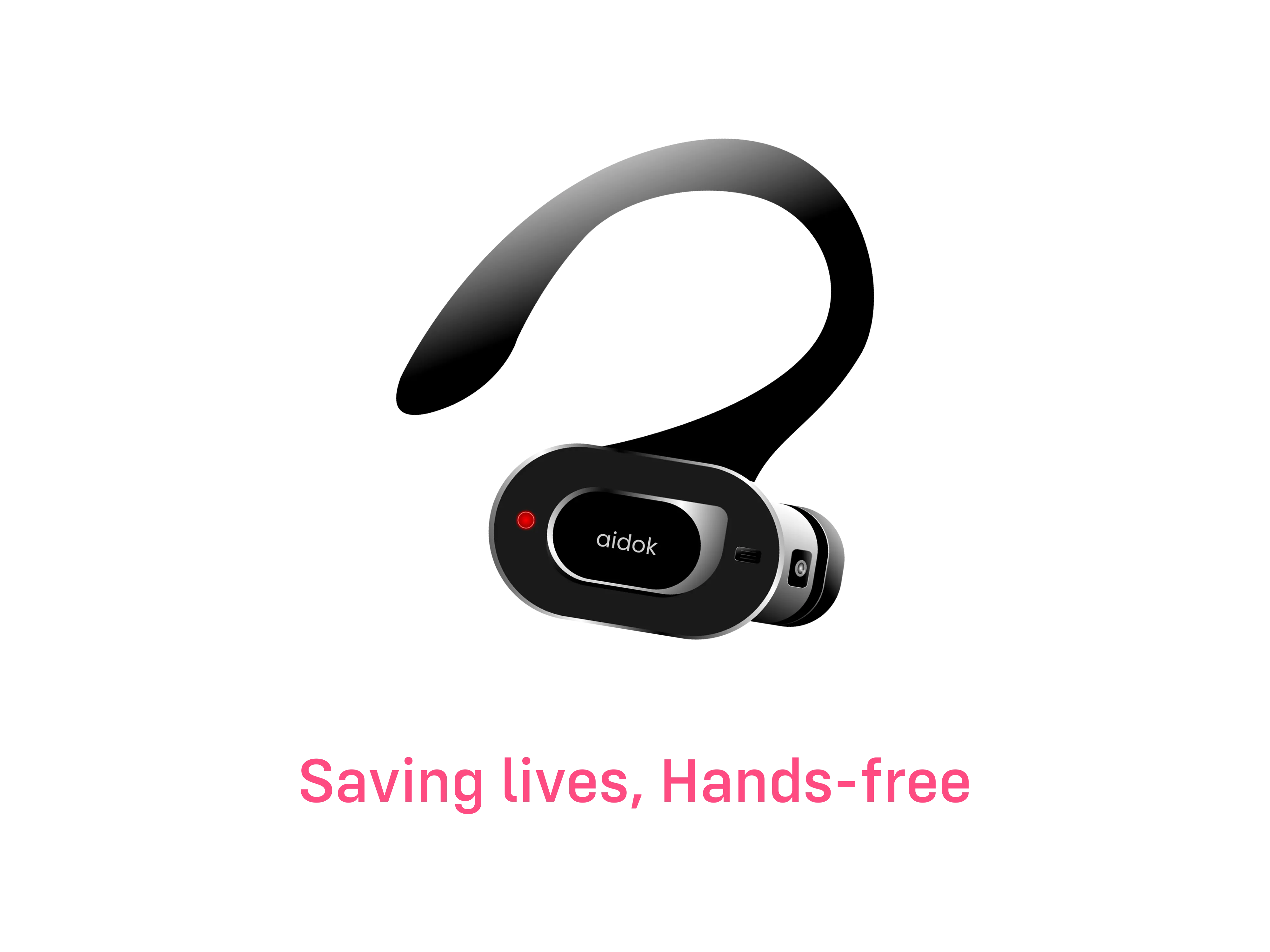
Our team, Productive Pandas, partnered with Solita to conceptualize a hands-free user experience (HF-UX) solution tailored for nurses. The objective was to address the challenges nurses face in multitasking and documentation by leveraging cutting-edge technologies like generative AI and speech-to-text systems. The proposed solution offers an intuitive and efficient way for nurses to access and document patient data while maintaining seamless interaction with other healthcare professionals.
Timeline
The project spanned over eight weeks, during which we conducted research, developed design concepts, and created a prototype to present our solution.
Background
Healthcare professionals, especially nurses, face significant challenges in balancing patient care with administrative tasks. Our focus on hands-free UX aims to alleviate these challenges by enabling efficient multitasking through speech-based interfaces. The project is also aligned with Solita's vision of integrating AI-driven solutions in healthcare to enhance productivity and patient care.
This category details the step-by-step approach taken during the project, including research, planning, design, development, testing, and optimization phases.
Research & Planning
We began with an extensive needs analysis, including interviews with paramedics, to understand their pain points. The insights guided our ideation of hands-free interaction concepts that could support nurses in dynamic and high-pressure environments.
Design & Prototyping
User-centered design principles informed the development of interactive prototypes. Our team leveraged tools like Figma for prototyping and Miro for collaborative ideation sessions.
Implementation
Integrated voice-activated commands for hands-free data management, real-time data integration for instant access to patient history and vitals, and compatibility with wearable devices like AR glasses to display critical information. Ensured secure communication channels to support confidential collaboration between nurses and doctors.
Testing & Optimization
We refined our prototype through iterative testing with healthcare professionals, gathering feedback to enhance usability and performance.
Our project delivers a robust hands-free UX framework designed to reduce cognitive load, streamline documentation, and improve care delivery.
Voice-Activated Commands and Data Entry
Nurses can use voice commands to input and retrieve patient data, significantly reducing the time spent on manual documentation. This ensures that patient records are updated in real time without diverting attention from care.
Wearable Integration
Devices such as augmented reality (AR) glasses provide a heads-up display of critical patient information, such as vitals, medication schedules, and alerts, without requiring physical contact with traditional systems.
Advanced Noise Cancellation
Given the noisy environments in which nurses often work, the system incorporates advanced noise-cancellation technology to ensure clear and accurate voice recognition.
Real-Time Data Syncing
The system connects with hospital databases to fetch and update patient records instantly. This feature reduces delays in accessing vital medical history and ensures that the data is always up-to-date.
Collaborative Tools
The system supports secure, hands-free communication between nurses and other healthcare providers. Video calls, voice notes, and real-time updates foster better teamwork and decision-making.
Enhanced Ergonomics and Accessibility
By reducing the need for physical interaction with devices, the system helps mitigate the physical strain on nurses, contributing to a more ergonomic and accessible healthcare environment.
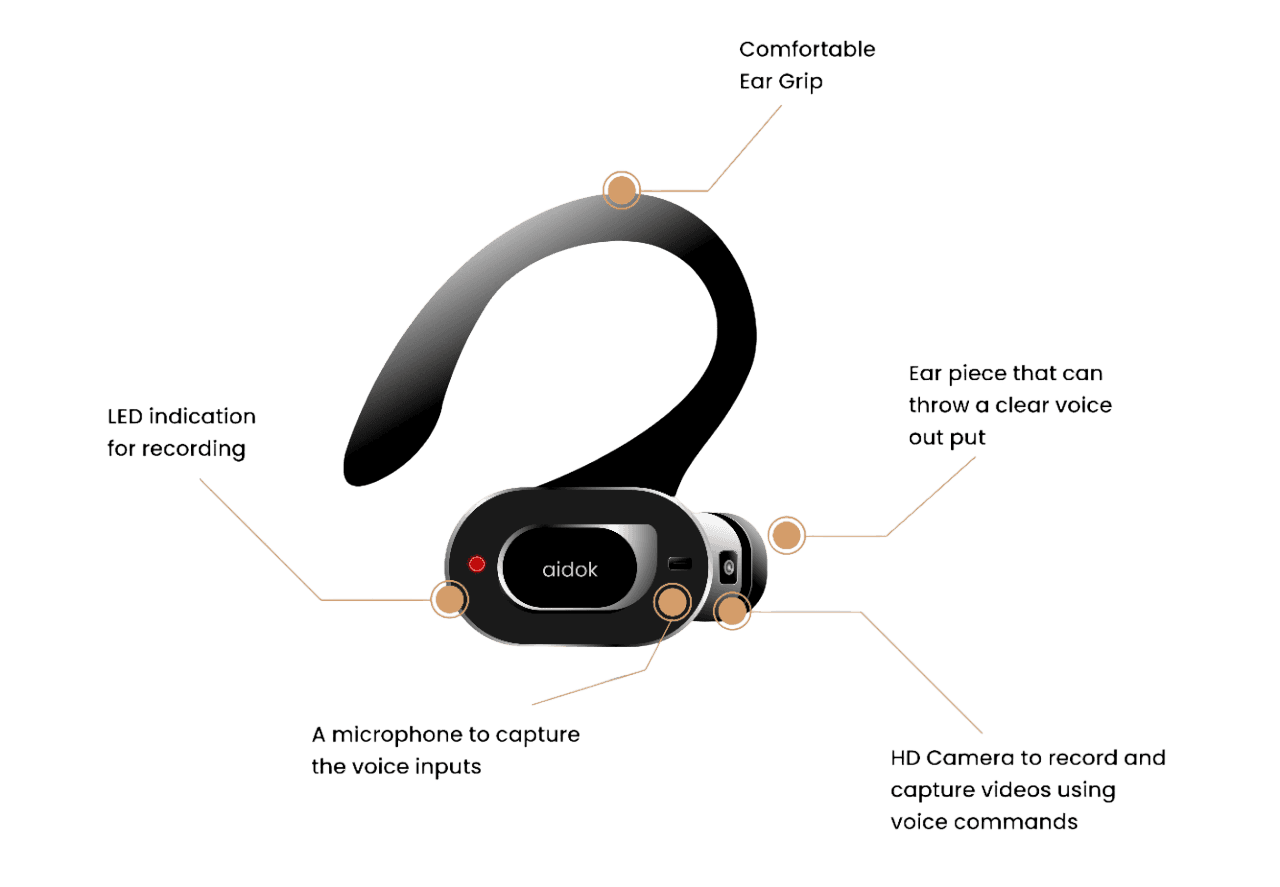
By bridging the gap between technology and healthcare, our solution showcases a future where nurses can deliver efficient, high-quality care while relying on intuitive, hands-free systems.
User Feedback
Feedback from healthcare professionals underscored the system’s practicality and ease of use. Nurses highlighted how the hands-free interaction streamlined their tasks, allowing them to focus more on patient care. One nurse stated, “This tool would be a game-changer during high-pressure situations like emergencies, where every second counts.”
Efficiency Gains
Preliminary tests indicated a reduction in documentation time by approximately 30%. This time-saving could translate into more direct patient interaction, enhancing overall care quality.
Error Reduction
The voice-activated system’s automatic data entry and validation features reduced common documentation errors, ensuring greater accuracy in patient records.
Scalability and Flexibility
The voice-activated system’s automatic data entry and validation features reduced common documentation errors, ensuring greater accuracy in patient records.
This was one of the most challenging projects I’ve worked on, as I was unfamiliar with the Finnish medical system and faced a significant language barrier. Most services were tailored for locals, which made it harder to grasp the nuances initially. However, as the team came together, these challenges turned into opportunities. The language and cultural differences pushed us to explore the problem from broader perspectives, leading to a deeper understanding of the users’ needs.
Through this experience, I strengthened my adaptability and collaborative problem-solving skills, learning to navigate complex systems and communicate effectively despite barriers. It also enhanced my empathy and ability to design solutions that cater to diverse user groups. Ultimately, our team created a product that simplifies workflows for medical staff, showcasing the power of inclusivity and teamwork in design.