Nutrish
A Gamified App for Anorexia Support.
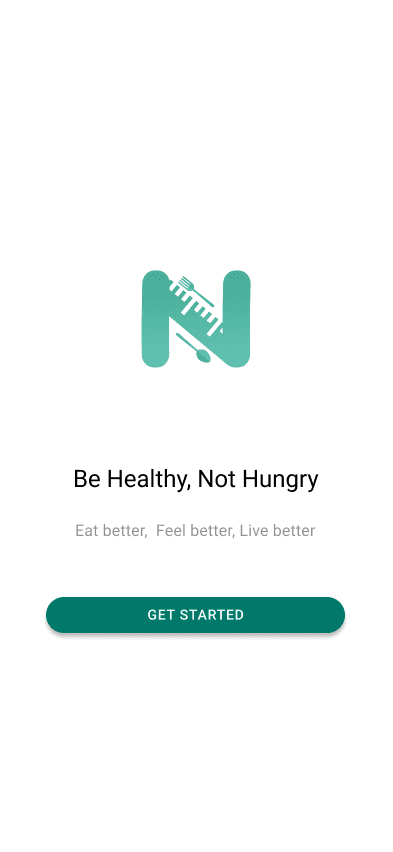
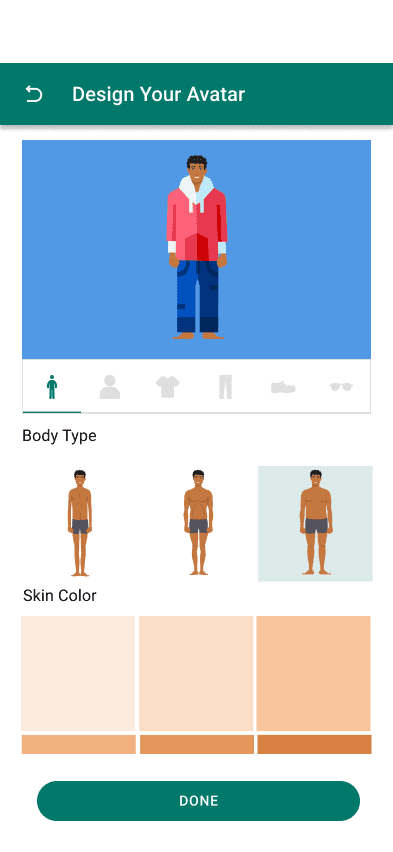
Our team designed and developed Nutrish, a mobile application tailored to assist anorexia patients in Pakistan. The app combines self-assessment tools, physician support, and gamification to promote healthy eating habits. It offers an interactive and culturally sensitive approach to tackle the challenges surrounding eating disorders, encouraging users to improve their well-being through community support and personalized strategies.
Timeline
We conducted user research, designed, developed, and tested the app over an eight-week period, overcoming user challenges such as
Background
This project addresses the critical need for accessible eating disorder interventions in Pakistan, where societal stigma and a lack of mental health resources exacerbate the problem. By integrating elements like avatar-based gamification and a recommender system, Nutrish provides a user-friendly platform for self-diagnosis and guided recovery.
This category details the step-by-step approach taken during the project, including research, planning, design, development, testing, and optimization phases.
Research & Planning
We conducted extensive user research through surveys and interviews, identifying key barriers to adopting eating disorder-focused applications. The data revealed gaps in self-diagnosis tools and post-diagnosis support, which guided our design process.
Design & Prototyping
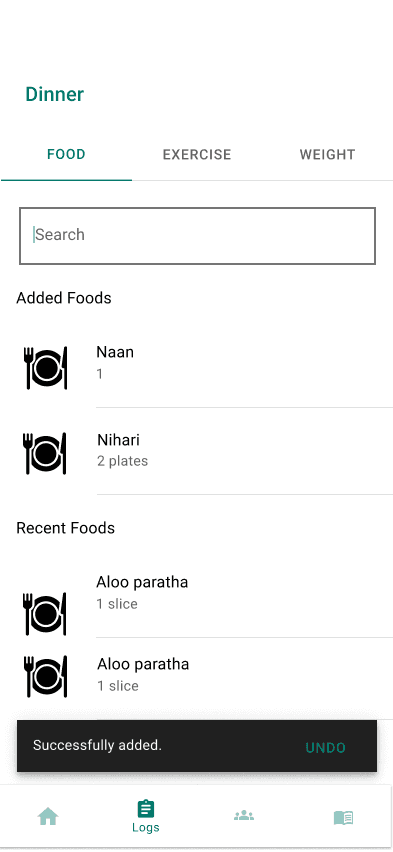
Using user insights, we created a customizable, intuitive interface with features such as avatar creation and interactive meal logging. Low-fidelity and high-fidelity prototypes were iteratively tested for usability and accessibility.
Implementation
Key app features include:
Self-assessment and Physician Support: Tools for diagnosis and professional guidance.
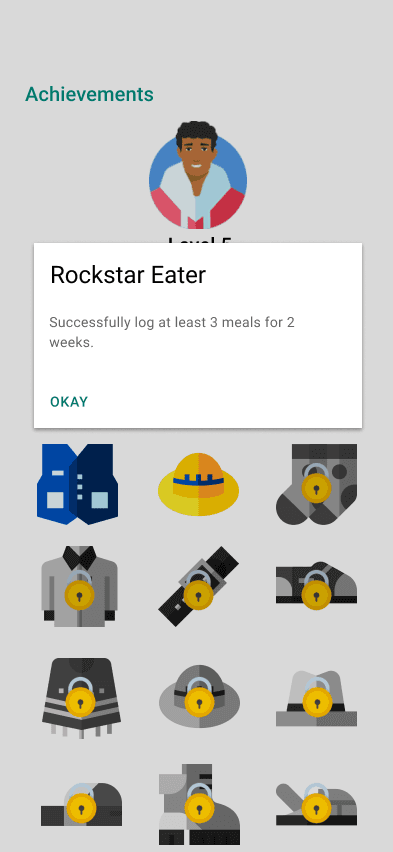
Avatar-Based Gamification: Personalized avatars to make the experience engaging.
Tracking Diet and Activities: Helping users monitor their progress effectively.
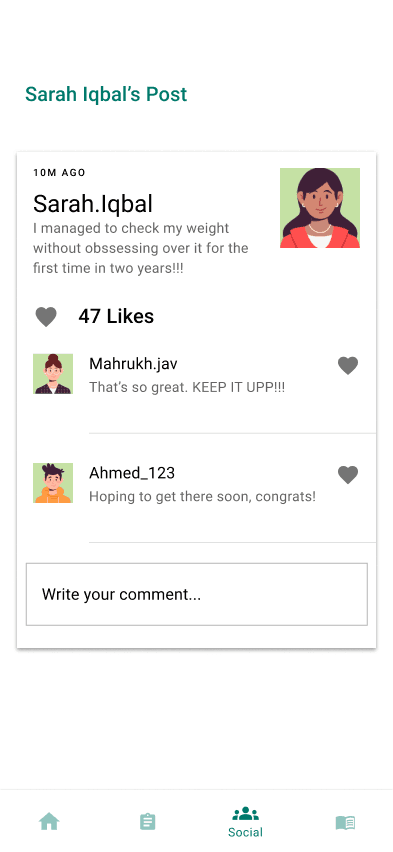
Community Building: Fostering peer support through posts and comments.
Reminders and Notifications: Encouraging adherence to healthy habits.
Testing & Optimization
Usability testing across diverse user groups highlighted strengths and areas for improvement. Metrics like task completion times and user error rates were monitored to refine the app.
Nutrish bridges the gap between clinical needs and user-friendly design for eating disorder interventions.
Interactive Experience
Users engage with avatars and scenarios tailored to their preferences, encouraging sustained app use.
Cultural Relevance
Localized features and content ensure the app resonates with the target demographic.
Community Support
The app promotes social interaction, empowering users to overcome isolation and stigma.
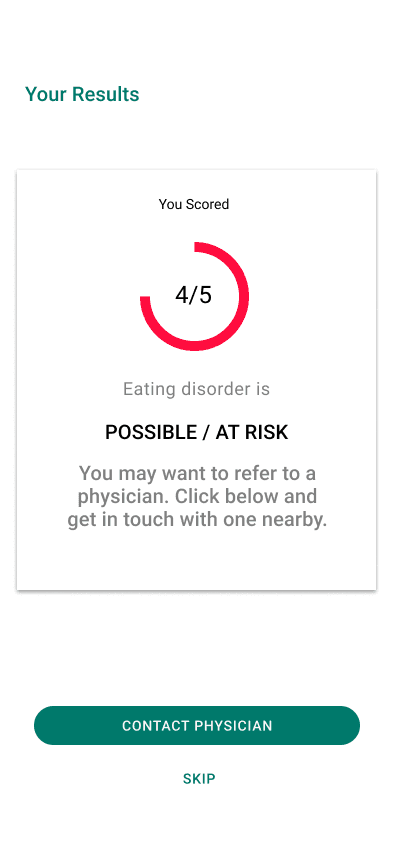
Here, the outcomes and achievements of the project are highlighted, including user feedback, adoption rates, and industry recognition.
User Feedback
Participants praised Nutrish for its interactive design and relatable features, describing it as "helpful and motivating."
Improved Awareness
The app increased users' understanding of healthy eating habits, fostering greater self-awareness.
Scalability Potential
Nutrish demonstrates a robust model for adapting eating disorder support tools to other regions and cultural contexts.
As my first major design project, there were various key learnings. I became familiar with designing user-centered applications, including scenario building and analysis and conducting user research. The significance of low-fidelity prototypes to test ideas also became apparent. Other things I learned included the importance of backing user flows with primary research which is only possible through genuine interactions and strict confidentiality agreements.