MenuSalvage
Student-focused sustainability solution to cut food waste.
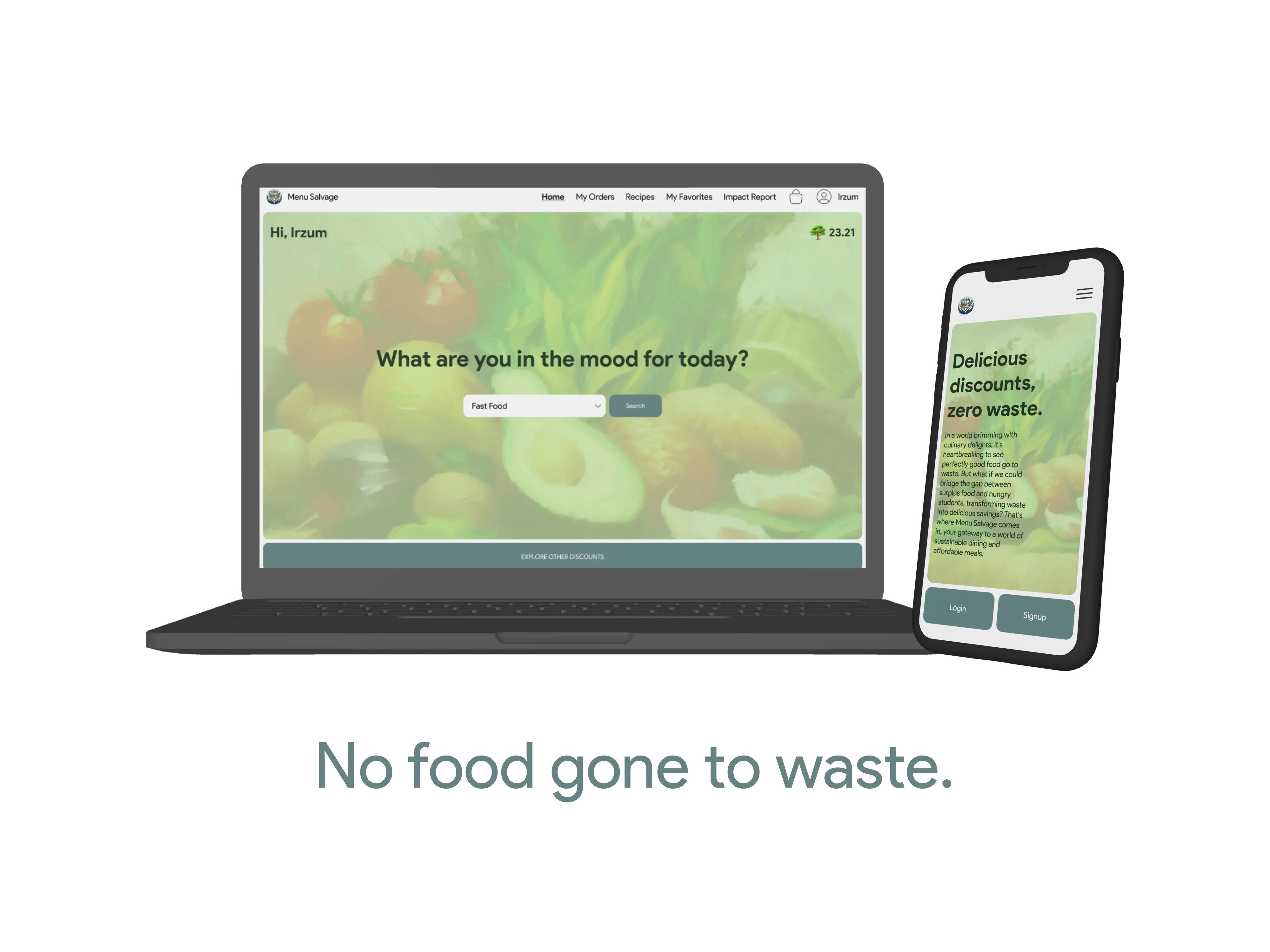
MenuSalvage promotes sustainable behavior by addressing food waste, a significant environmental issue. The app allows users to purchase discounted food that would otherwise go to waste, offering a cost-effective and environmentally friendly solution. Students, in particular, can save on groceries while practicing sustainability.
Timeline
The project was completed over an eight-week period, focusing on user research, design, development, and prototyping.
Background
Food waste contributes heavily to climate change, with universities and urban areas often wasting significant amounts of edible food. MenuSalvage targets this problem by offering a simple and accessible way for students to engage in sustainable practices without compromising on cost or convenience.
This category details the step-by-step approach taken during the project, including research, planning, design, development, testing, and optimization phases.
Research & Planning
Interviews with students highlighted their concerns about food waste, affordability, and transparency in food sourcing. Insights from this research shaped the app's core features, such as sustainability reports and reward systems.
Design & Prototyping
The app’s interface was designed with simplicity and usability in mind, featuring interactive wireframes and high-fidelity prototypes. It offers seamless navigation, a green-themed aesthetic to align with sustainability goals, and clear indicators for food quality and origin.
Implementation
Key app features include:
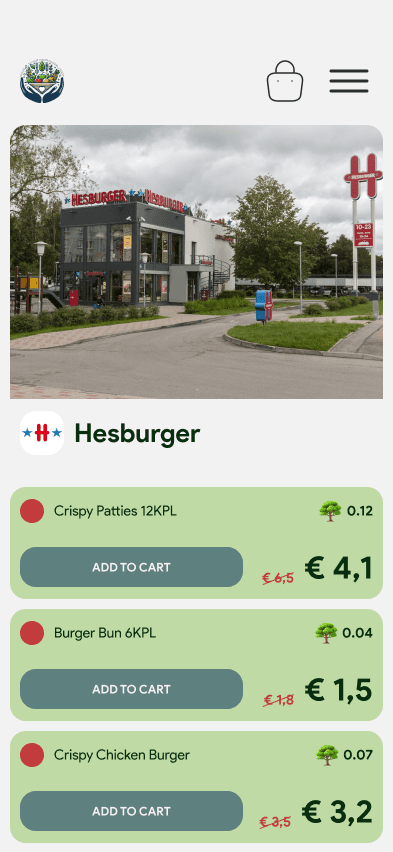
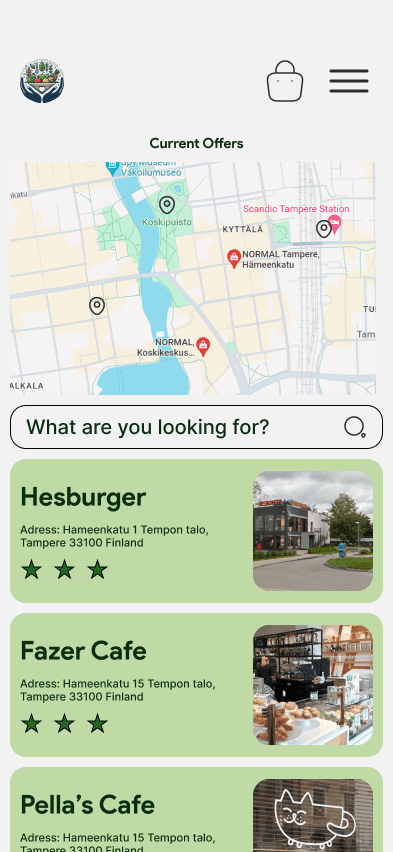
Discounted Food Offers: Listings from restaurants and shops for food nearing its expiration date.
Sustainability Reports: Easy-to-understand carbon footprint indicators using tree symbols.
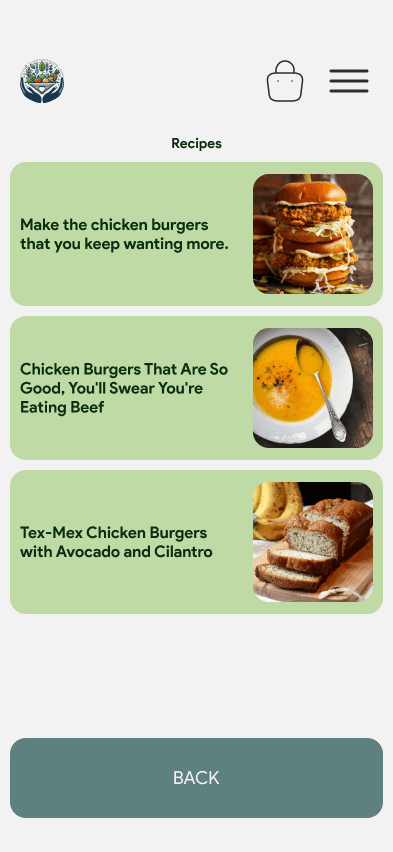
Recipe Integration: Suggestions for making the most of purchased items.
Gamification & Rewards: Users earn points for purchases and can compete on sustainability leaderboards.
Accessibility Features: High-contrast colors and icon-text combinations ensure usability for diverse audiences.
Testing & Optimization
Usability testing across diverse user groups highlighted strengths and areas for improvement. Metrics like task completion times and user error rates were monitored to refine the app.
MenuSalvage offers a scalable platform to combat food waste by creating a win-win scenario for students and food businesses. The app empowers users to adopt sustainable habits while enjoying economic benefits.
Economic Sustainability
MenuSalvage offers a cost-effective solution for students to access affordable meals, easing financial strain while promoting sustainable consumption.
Sustainability Impact
By reducing food waste, the app directly contributes to lowering greenhouse gas emissions associated with food disposal. The sustainability reports reinforce users’ eco-friendly behaviors.
Behavioral Change through Gamification
Gamified elements, such as points and leaderboards, create a compelling experience that encourages continuous engagement and long-term adoption of sustainable practices.
Community Engagement
The app fosters a sense of belonging and shared purpose through community features, where users can collaborate, compete, and share achievements.

Here, the outcomes and achievements of the project are highlighted, including user feedback, adoption rates, and industry recognition.
User Feedback
The interactive prototype received positive feedback for its engaging design and practical features. Users appreciated the recipe suggestions and sustainability reports, which enhanced their experience.
Sustainability Impact
By connecting users with food that would otherwise be wasted, MenuSalvage helps reduce the carbon footprint of food production and disposal.
Potential for Expansion
The concept can be adapted to various demographics and regions, emphasizing the universal need to combat food waste through innovative solutions.
This project, though short, was a highly enriching learning experience. Collaborating with a diverse group of students from social sciences and business backgrounds broadened my perspective beyond the technical domain. It taught me to approach problem-solving holistically, considering factors like user behavior, market viability, and business strategy.
Through this collaboration, I honed my communication and teamwork skills, as I had to effectively convey technical concepts to non-technical peers while actively incorporating their input into the product development process. Additionally, it enhanced my critical thinking and adaptability, as I learned to integrate insights from different disciplines to create a well-rounded solution.
Overall, this experience deepened my understanding of what it takes to build a successful product—not just technical excellence but also a thorough understanding of user needs, market demands, and cross-functional collaboration.